
Among the places to travel in and through books is the past as imagined by novelists or interpreted by historians. The time and place when and where I most like to travel is Tudor and Elizabethan England. It’s mostly fiction that I read, but I have close to hand reference material that gives context to the stories I am reading, material based on documents and artifacts produced in that 16th to early 17th century period. This is a period of vast changes in the view of the universe and the rise of literacy necessitated by shifting technologies. Material written at this time is still accessible to us without glossaries and translations.
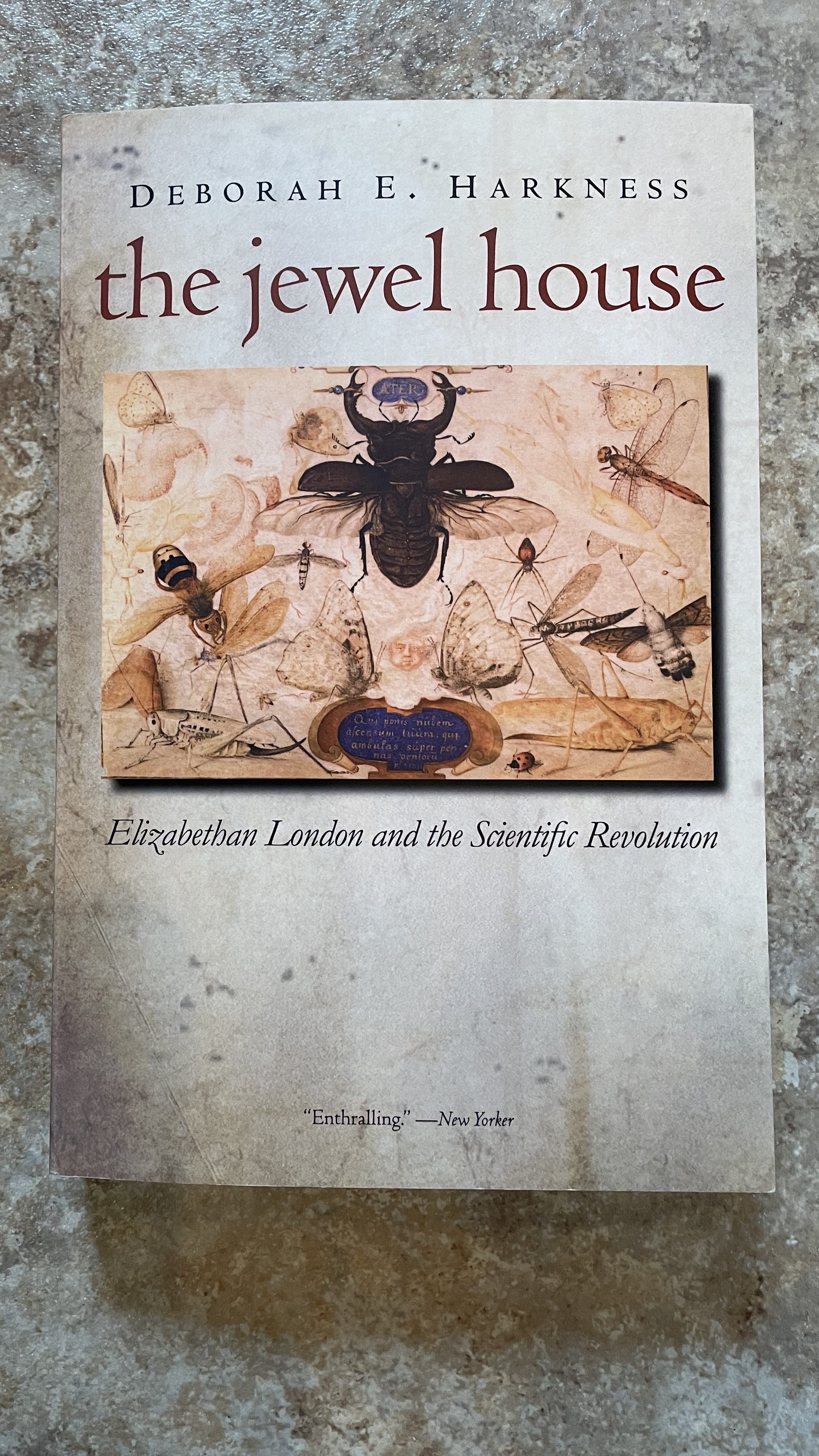
Just now, I’m deeply engaged with the life and times of Christopher “Kit” Marlowe. Kit features in Deborah Harkness’ Shadow of Night (2013) as a spiteful, lovelorn character who is nonetheless a brilliant poet-playwright. The world that Harkness creates in this, the middle of her “All Souls’” trilogy, is heavily informed by her research subject–the scientific revolution that has its beginnings in the 16th century–a time of exploration, experimentation, and classification. She makes accessible to us the experiences of real folk in The Jewel House: Elizabethan London and the Scientific Revolution, one of the handy readable reference tools I have to hand while I wander around the early modern period.
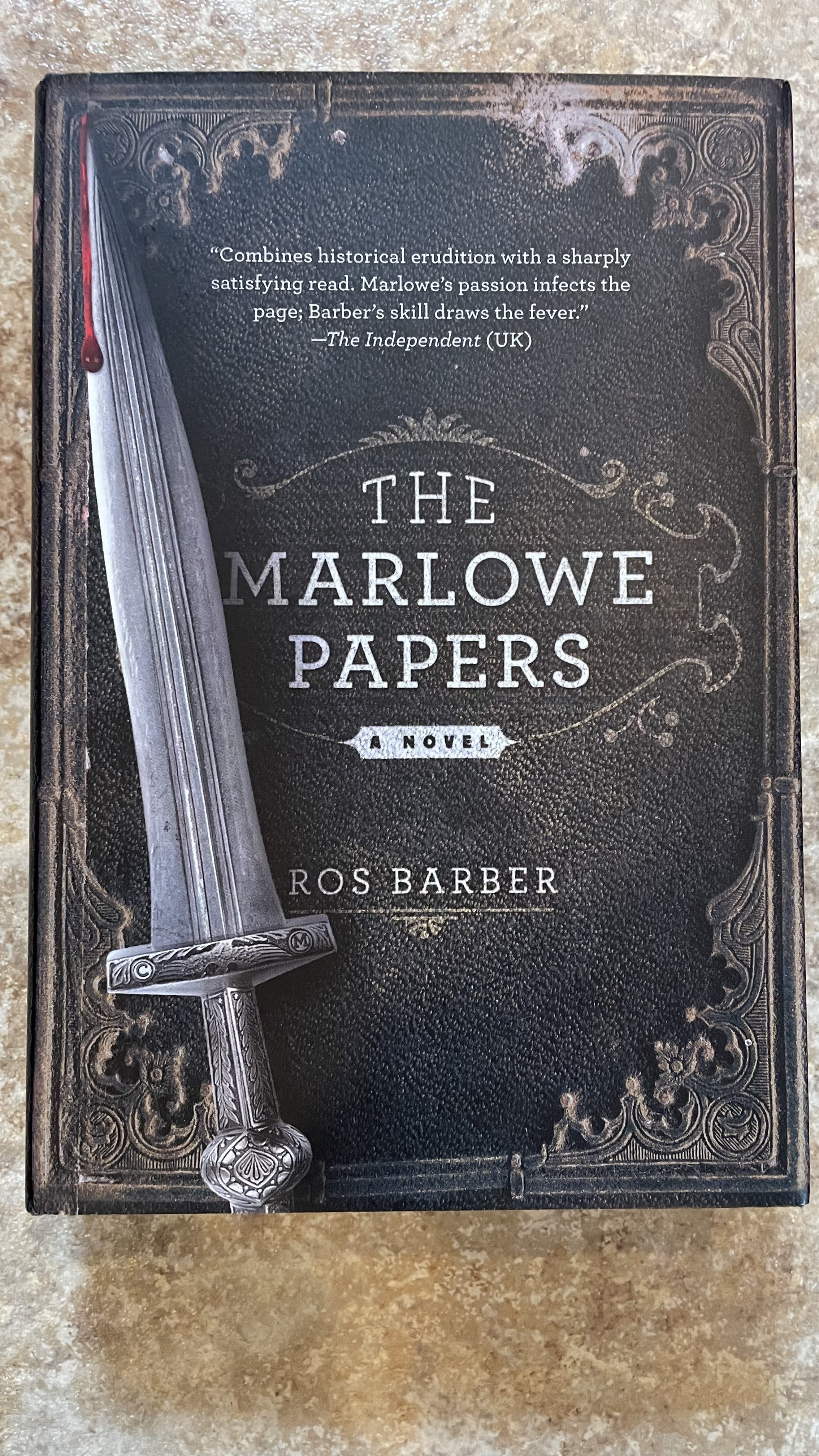
Some time ago, I read The Marlowe Papers (2012), a novel in verse by Ros Barber. The conjecture here is that Marlowe did not die in a tavern brawl in Deptford, but was carried off to the continent where he continued spying and continued writing–as Shakespeare. Barber’s novel-in-verse is informed by her doctoral research, but not overwhelmed by it. (Some writers seem to have been so interested by their research that they must pour all of it into their work.)
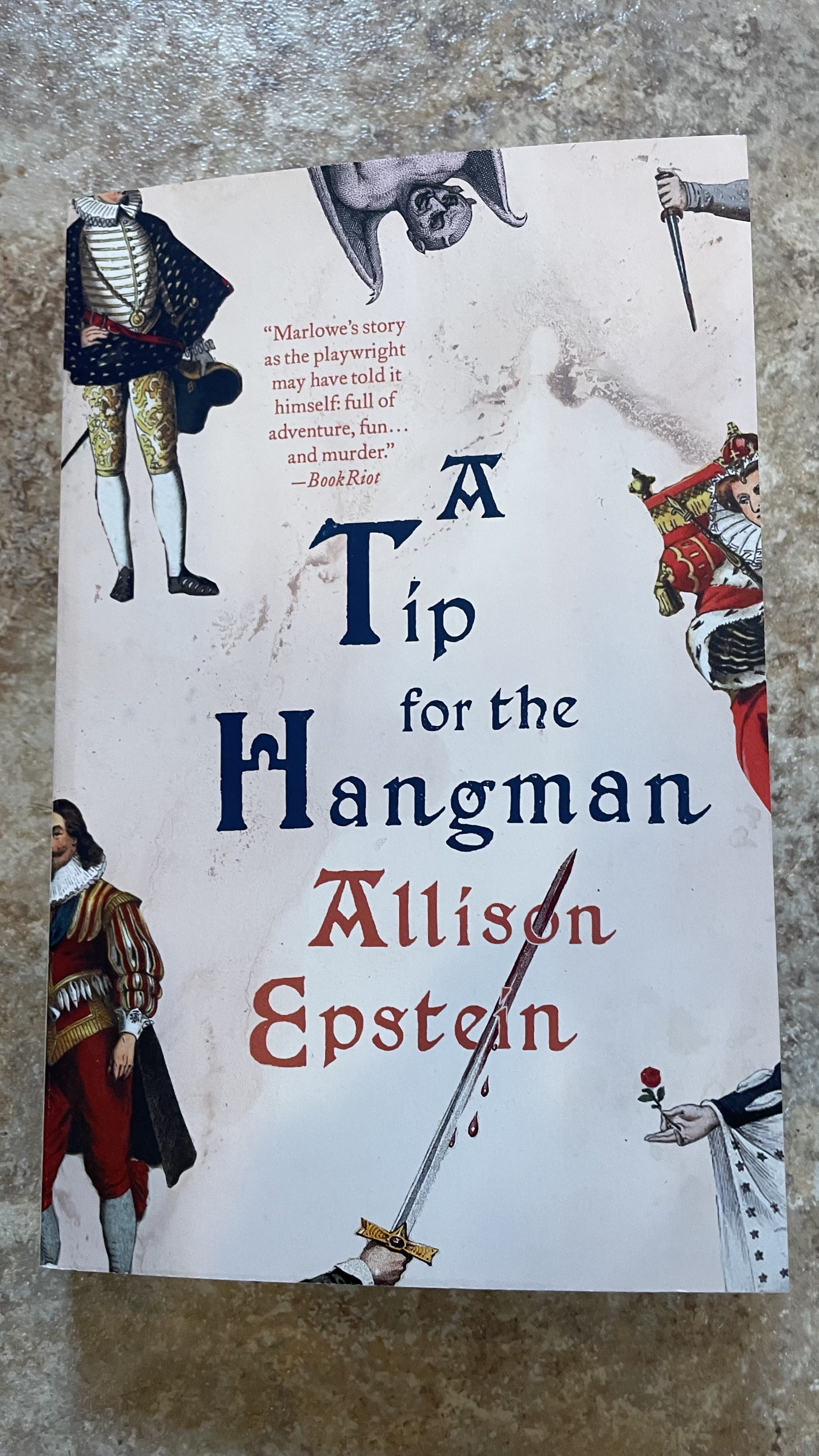
And now, I’m in the midst of A Tip for the Hangman by Allison Epstein. This novel explores Marlowe’s life from the time he’s recruited by Walsingham to spy for Elizabeth. I came to this novel by way of the Folger’s “Words, Words, Words” online book group. I’ve never actually joined or organized a book group, but I’ve found participating in this group offers insights that I had (very likely) missed in my own reading. The program offers titles that I had not come upon before, so it’s expanded my library. Because the Folger is an educational institution (with the largest collection of Shakespeare-associated material outside of the UK), there is an embarrassment of riches offered to the reader to flesh out the reading experience. Another aspect of the reading program is the link each month to an independent book store partner. (I order my books from Harriett’s Books bookshop.org link.)
A wander through the Folger “Words, Words, Words” reveals the books and supporting materials associated with them over the last couple of years. Some of novels that are chosen seem to have a tenuous link to Shakespeare or the early modern period, but they are worth reading, offering introductions to previously unfamiliar authors and worlds.
 Booked for Travel