
I’m a fool for magazines. I subscribe to both print and digital versions of The New Yorker, The Economist, Vanity Fair, and The Atlantic. I pick up knitting magazines in the locally owned yarn stores where I shop. I’ve got multiple issues of Pompom (out of the UK), Vogue Knitting, and Interweave Knits hanging around on several bookcases and tables in the house.

I think I’m drawn to the total sensory experience of opening a magazine–there’s the scent of fresh print and paper, the tactile response to the paper whether glossy or matte finish, the visual explosion of color and composition.
As I peruse the knitting magazines, I imagine myself looking for inspiration or learning new techniques. Sometimes I’ll read the articles, but mostly, it’s a trip through a picture book. I have the same response to some knitting books; I’ll buy them because of lay-out or book design. I return to them again and again in the same way a child might return to a favorite picture book.
Just as I sort of collect magazines, I sort of collect wool and alpaca yarns. I mostly remember the circumstances for purchasing each particular skein. Some of those yarns have been made into finished products that I’ve passed along and some of those yarns are still in a state of construction, while other skeins are in a state of potentiality. I continue to buy more yarn with no specific project in mind, particularly from small-scale producers. It’s usually just a skein or two, enough to create a small project or two and a memory of the event or place where I purchased it, a topic I’ll come back to in a future post.
One of the pleasures of attending fiber shows–and there are several worth visiting–is having the opportunity to speak with the producers of the yarn, whether it’s the farmer who raises the animals or the mill-owner who produces the yarn or the dyer whose color sense excites the eye. These yarns are not the sort to be found in chain stores, and they tend to be more expensive than the large commercial brands. I purchased the following yarns at the Vermont Sheep and Wool Festival in early October and at farmers markets in Vermont.
This yarn will become a hat or two. It’s from a conservancy farmer (Shave ‘em to save ‘em) whose Jacob sheep are small light-footed creatures that produce a pie-bald brown and white fleece. This yarn was produced at The Dancing Pony Sheep Farm, located in New Hampshire. A conservancy farmer is one who commits to maintaining heritage breeds and bio-diversity.

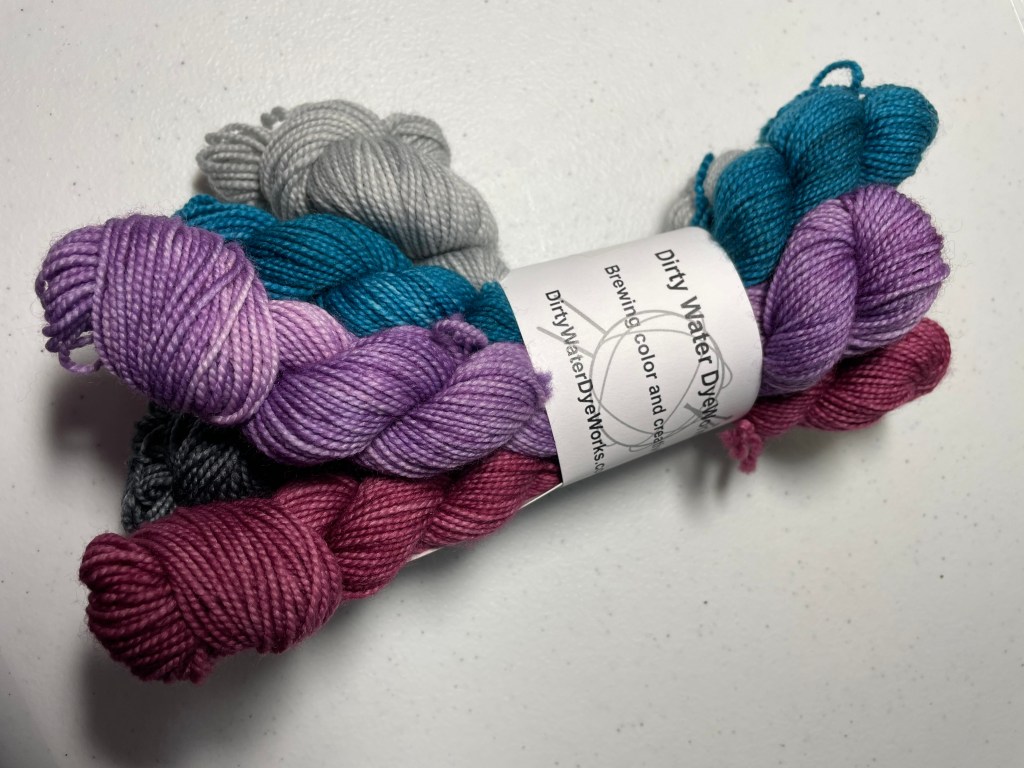
And this will become a sweater for my grandson. It’s dyed in small batches by Stephanie Griego whose company is Dirty Water Dyeworks in Boston. The jewel-tone colorways enchant the eye and invite the imagination to picture what this yarn will become.
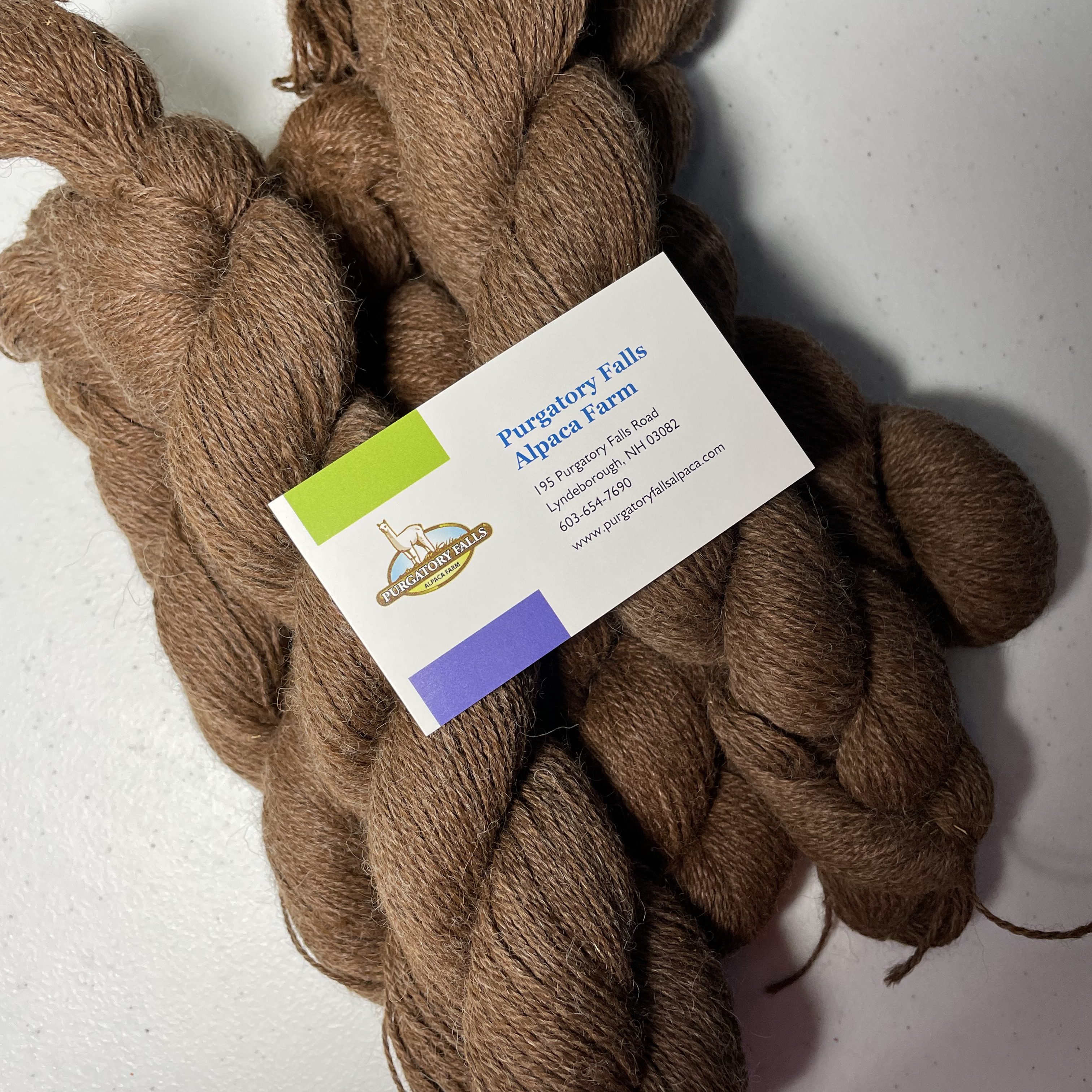
Purgatory Falls Alpaca Farm also in New Hampshire provided this alpaca/merino blend that will probably become scarves or balaclavas combined with some Pennsylvania alpaca yarn that’s been living in my yarn collection.
This russet wool from Fairy Tale Farm in Bridport, Vermont will become mittens, I think. I bought this at a farmers market from the farmer, from whom I also bought some cheese.

While the yarn is still wrapped as pictured here, it’s full of potential–what will it actually become and who will be the recipient? I’m facing an embarrassment of riches in deciding what yarn and project I will be packing as I head off to IcelandNoir 2022 in a couple of weeks–an event full of travel and books and a stop at a wool shop or two.
 Booked for Travel