
While we were all losing our minds as each novel in the Outlander series was published, I was also introduced to the historical fiction of Dorothy Dunnett. While others were Finding Frazer, I was looking for Lymond. The six-book series collectively known as The Lymond Chronicles covers the years between the death of Henry VIII and the accession of Elizabeth I (about 1547-1558) and the geography of much of Europe from Edinburgh to Moscow, Paris to Istanbul. Francis Crawford (Lymond is his land-title) is the quintessential Renaissance man–scholar, soldier, diplomat, spy.

The amount of research Dunnett pursued is evident in the world she invites us to view. Trained as a painter, Dunnett gives us precise descriptions of place and attire and persons. She includes vast amounts of history–literature, art, geo-politics, music. But these are not information dumps; rather, the research is used to immerse us in the world peopled not only by the fictional Francis and his family, but including historical personages–the DeGuises and Stuarts, Ivan the Terrible and Suleiman the Magnificent. When I am rereading the novels or re-listening to the audiobooks (masterfully narrated by David Monteath), I am wholly transported to that early modern age of discovery and exploration. I have to shake myself back into the 21st century.
And so, because I’ve had this decades-long affair with Francis and his companions, I made sure that our route to an academic conference in Glasgow carried us from Manchester through Lymond country. Because the two of us–George and I–have slightly different areas of interest, Abington served as a bit of a compromise: we could look around Crawford country while also looking at mining history in the area. This is not so far-fetched as it might seem: gold and lead have both been mined in this region. One of the plot points in the first of the Lymond Chronicles, The Game of Kings, features gold mined at Crawford Muir and its use in an alchemical scheme/scam. So off we went in search of the landscape known to Francis Crawford and the location of Leadhills and Wanlockhead, neighboring mining villages not far from the village of Abington. The Duke of Buccleuch owned the mines at Wanlockhead, and he sought to provide safe living and working conditions for the mine workers and their families. The fictionalized 16th century Buccleuch was Francis Crawford’s most avid, outspoken, and enduring supporter through the novel series.

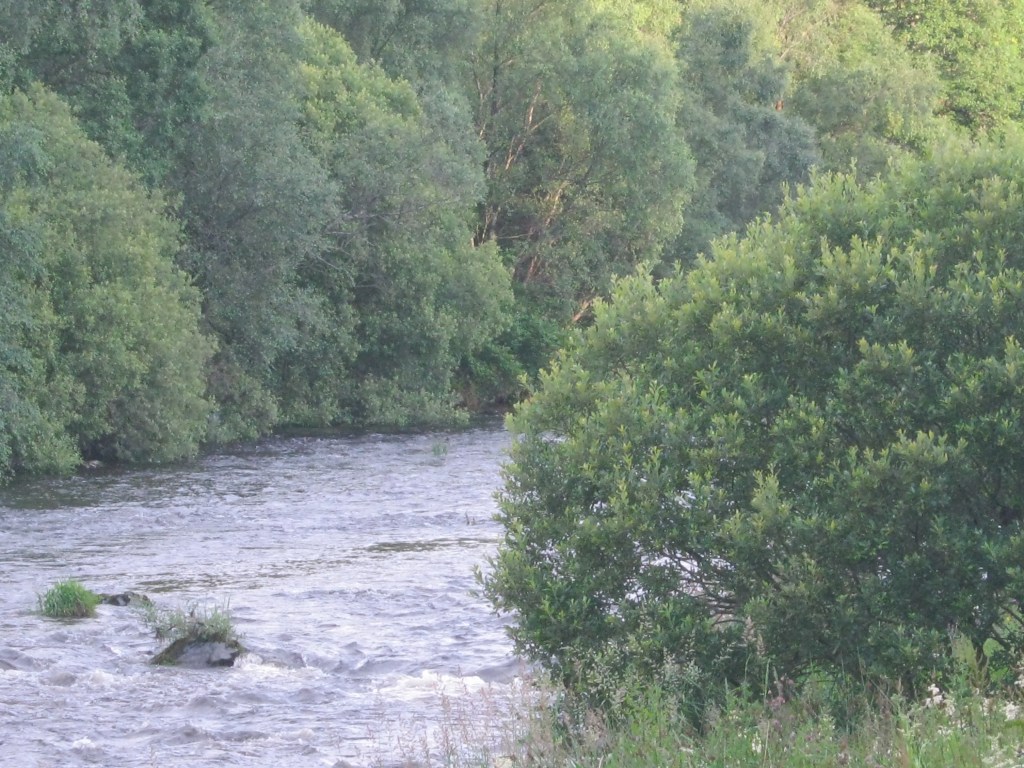
We walked along the bit of the Clyde that flows through the village. The river here is narrow but swift-running; we could see the current racing by. I was reminded of the episode in The Game of Kings where Richard, older brother of Francis, is helping Agnes, sole heiress to great wealth and land, to cross the river when their horses stumble and they are swept in the violence of the river. Though not distant from one shore to another, the river runs fast and the danger is obvious.
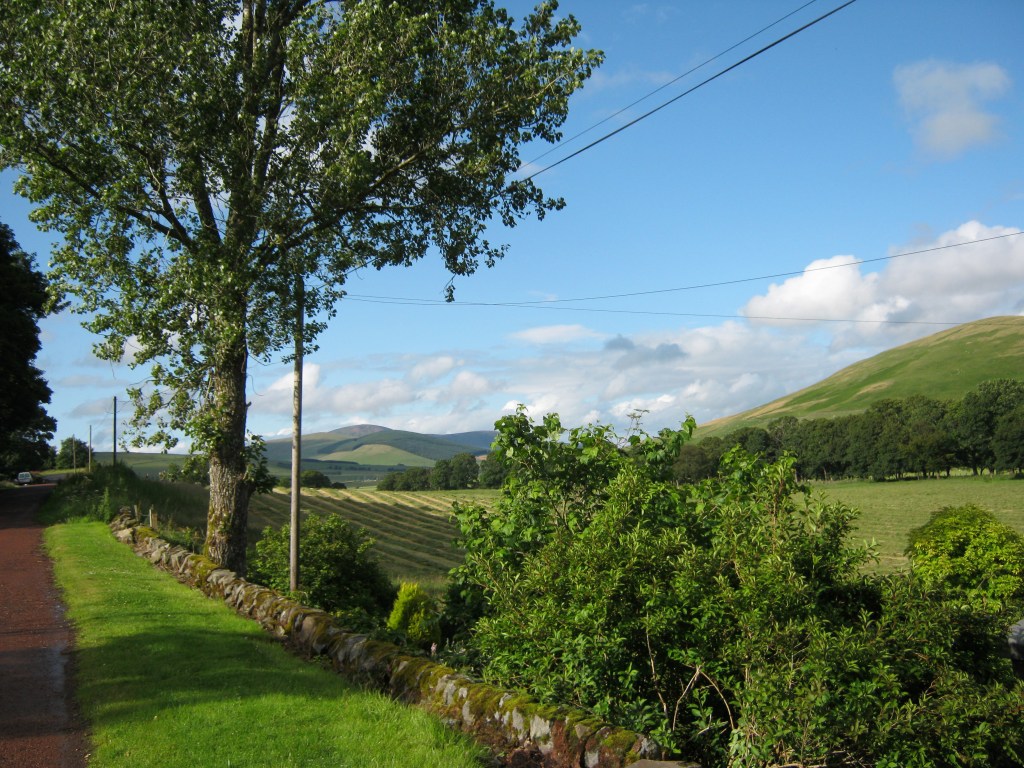
The village itself is quiet, well-kept with stunning flower gardens gracing every home, embraced within the surrounding hills. The village is close to the center of family life for the fictional 16th century Crawford family. With a bit of imagination and pretending not to see the power lines, I saw Francis Crawford storming across the landscape purging his beloved Scotland of English troops.
 Booked for Travel