
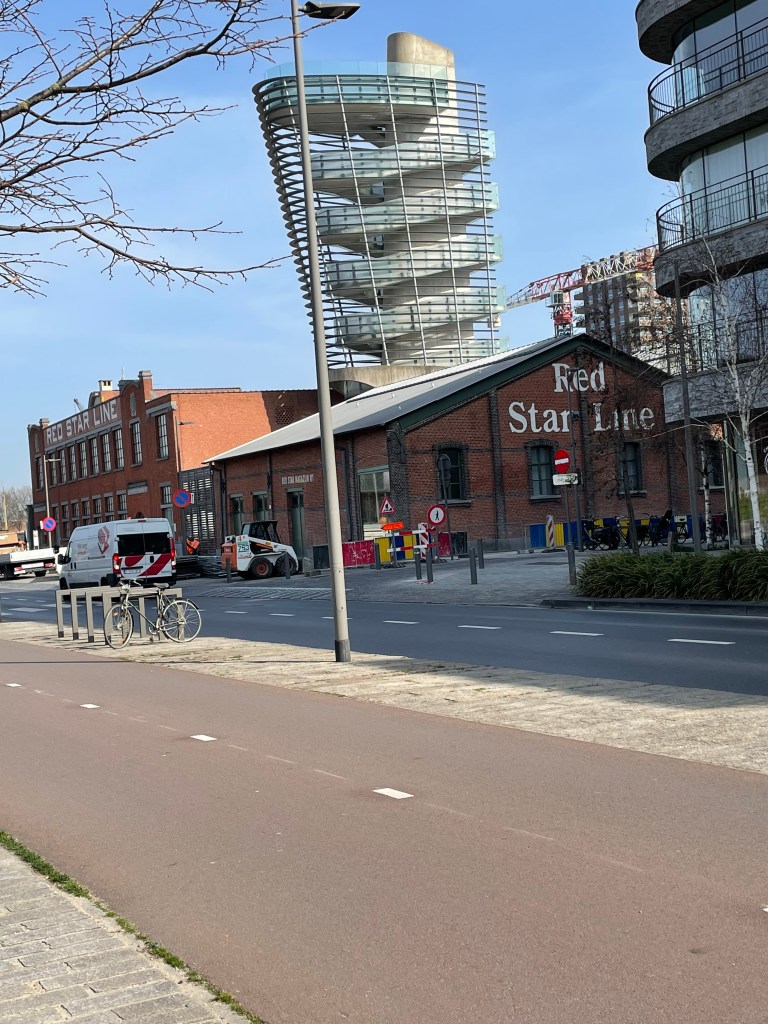
How do we choose what is kept and what is lost to time, disposed of in the course of living? It’s a conundrum, a puzzle for me as I look at the little hand-written journal with penciled in notations made by 18-year old Jacob Irion in 1890. Jacob would become my great-grandfather in the fullness of time, and in the fullness of time–4 generations later–his journal of that trip from Philadelphia to Europe has survived.

I came across it in a box of random stuff from my mother when she downsized for the third time. In the journal’s pages is a log of distances traveled and places visited by young Jacob, and, I guess, his family. This last bit drove our visit to the Red Star Line museum in Antwerp. I had hoped to find cruise passenger lists, but learned that they have been lost.
What we did find (we being daughter Gillian and I) was a fascinating museum with a focus on the Red Star Line’s and Antwerp’s role in moving millions of people who were emigrating from persecution, poverty, and war through Antwerp to the US. The starting point in the museum’s displays shows a timeline of human migration evidenced by archeological finds and recorded documents over the last several millennia.
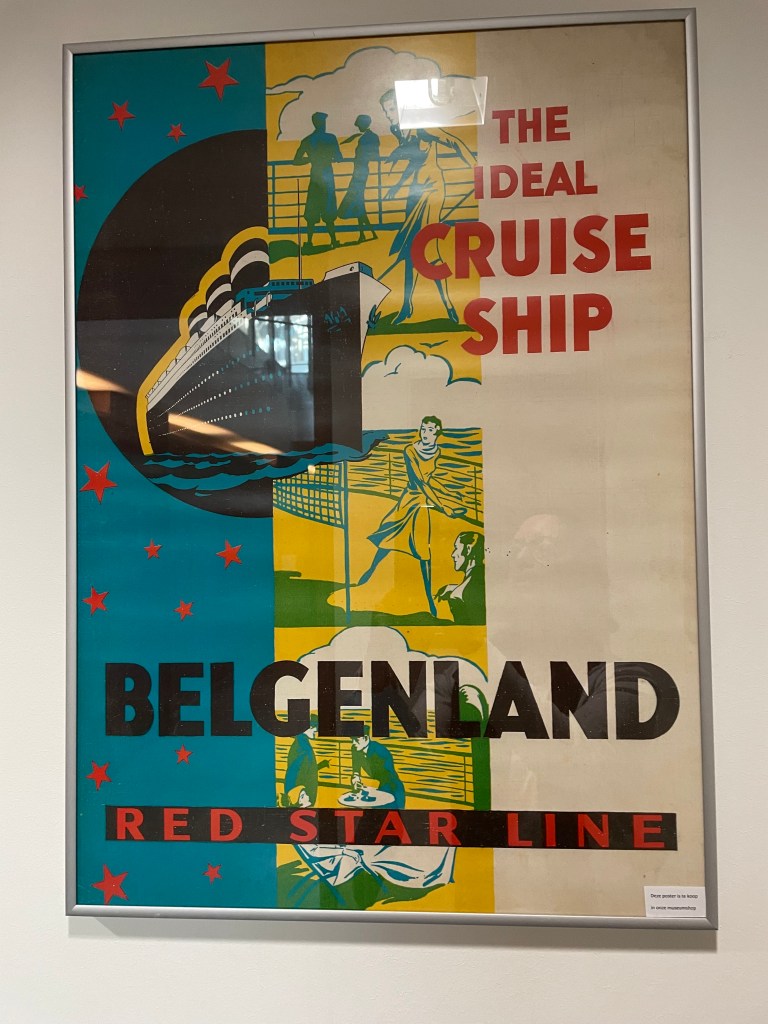
There’s much more for me to explore about Jacob’s trip, and much more to be said about Antwerp. That this journal has lasted for 130 years, I am grateful; it has offered me a multitude of ideas to explore. I’m glad, too, that the journal brought us to the Red Star Line Museum, where we met and were assisted by the receptionist who embraced our story.
Red Star Line Museum, Antwerp, Belgium (The site defaults to Dutch; you can tap English in the upper right-hand corner.)
 Booked for Travel